Blog
How to Create a Majlis-Inspired Seating Area in a Modern Home

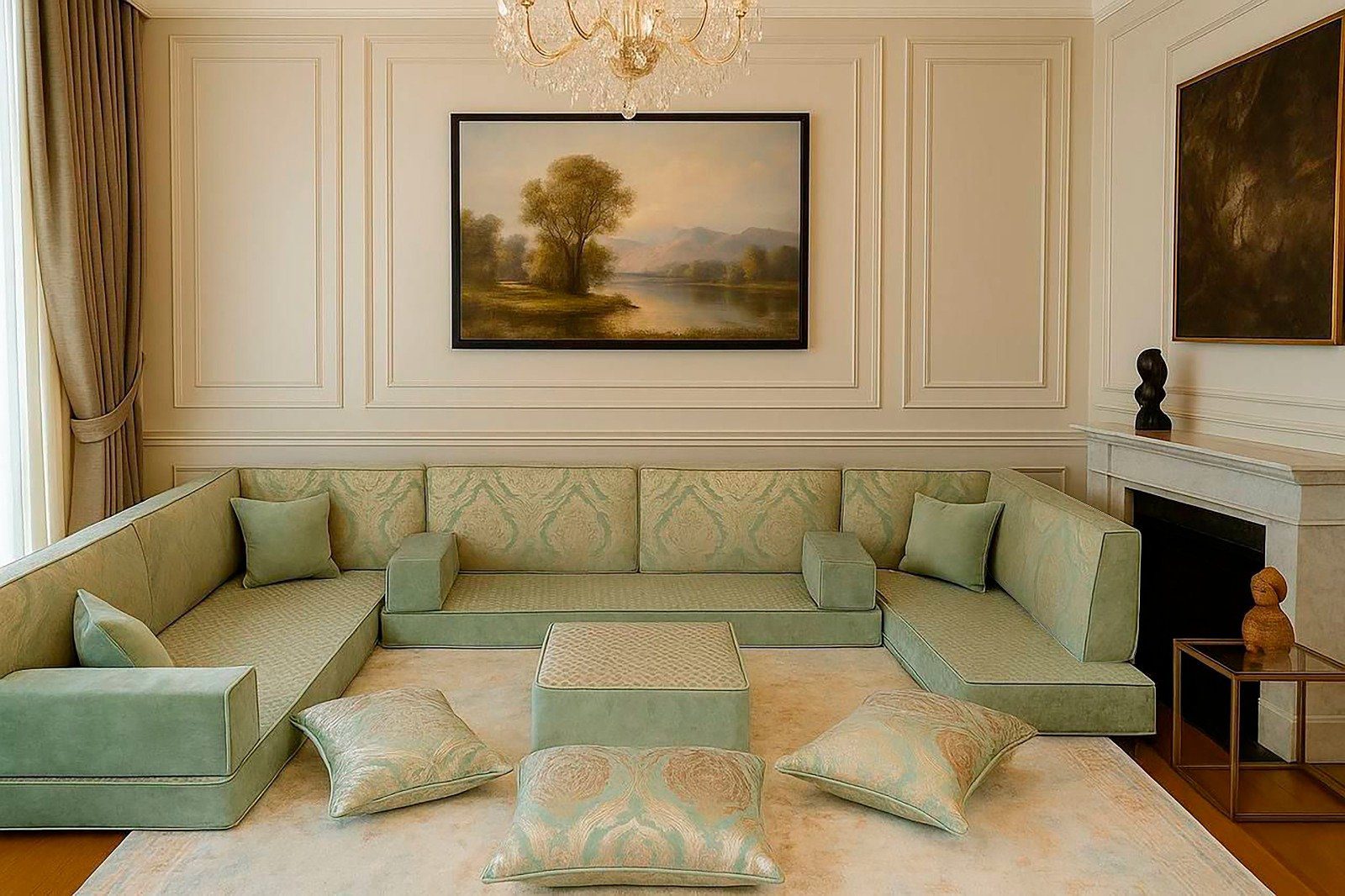
A majlis-inspired seating area brings people together in a way that feels both grounded and welcoming. Unlike conventional living room setups, it focuses on connection, comfort, and openness rather than fixed furniture arrangements.
Translating this concept into a modern home requires more than simply placing cushions along the walls. The layout, proportions, and materials all play a role in creating a space that feels intentional rather than improvised.
Understanding the Essence of a Majlis Layout
A traditional majlis is designed for gathering. Seating is arranged along the perimeter of the room, often forming a continuous line that encourages conversation and shared space.
At its core, this layout emphasizes:
- Inclusivity — everyone sits within the same visual and social circle
- Openness — the center of the room remains clear
- Comfort through layering rather than bulky furniture
In a modern setting, the goal isn’t to replicate tradition exactly, but to capture these underlying principles while adapting them to contemporary interiors.
Choosing the Right Room and Layout Approach
Not every room needs to be transformed entirely. A majlis-inspired setup can work as a full-room layout or as a defined seating zone within a larger space.
Full-room layout
This works best in:
- Square or rectangular rooms
- Spaces without heavy built-in furniture
- Rooms intended for social gathering or relaxation
Seating runs along the walls, creating a continuous or semi-continuous arrangement.
Partial or corner layout
In modern homes, a full perimeter layout may not always be practical. A corner-based arrangement can still capture the same feeling.
This approach:
- Uses one or two connected walls
- Leaves the rest of the room flexible
- Works well in open-plan living areas
Oriantal sofas: sofasia.com/oriental-sofas/
Building the Seating Foundation
The foundation of a majlis-style space is low, continuous seating. This is where comfort and structure need to work together.
Start with a consistent base
A uniform seating line creates visual cohesion. This can be achieved through modular low seating or layered cushions placed side by side.
Key considerations:
- Keep height consistent across the layout
- Ensure enough depth for relaxed sitting
- Avoid gaps that break the flow
Add supportive back layers
Back support is essential for longer sitting periods. This can be created with:
- Larger back cushions
- Layered pillows of varying firmness
- Wall-supported seating arrangements
Floor cushion sets: sofasia.com/floor-sofas
The goal is to create a seating surface that feels continuous, not segmented.
Balancing Comfort With Practical Use
A majlis-inspired space should feel inviting for extended use, not just visually appealing.
Plan for different sitting styles
People won’t all sit the same way. Some will lean, others will stretch out, and some may sit cross-legged.
To accommodate this:
- Vary cushion firmness slightly
- Provide enough depth for multiple positions
- Include movable pieces that can be adjusted
Consider daily usability
If the space is used frequently, it needs to stay functional:
- Cushions should retain their shape
- Covers should be easy to clean
- The layout should remain tidy without constant adjustment
Comfort in this context is not just softness—it’s how well the space supports real use over time.
Creating a Cohesive Visual Style
The visual identity of a majlis-inspired space comes from layering rather than large statement pieces.
Focus on texture and material
Instead of relying on bulky furniture, the atmosphere is built through:
- Fabrics with depth (woven, textured, or slightly structured)
- Coordinated but not identical cushion covers
- Rugs that anchor the seating area
Keep the color palette intentional
A cohesive palette helps unify the layout. This doesn’t mean everything needs to match, but tones should feel connected.
- Neutral bases create a calm foundation
- Accent colors can be introduced through smaller elements
- Avoid too many contrasting tones in a compact space
Use low-profile accessories
Tables, trays, or lighting should stay close to the ground to maintain the visual flow. Tall or bulky elements can disrupt the balance.
Adapting the Concept to Modern Lifestyles
Modern homes often require flexibility. A majlis-inspired setup can adapt to different needs if planned thoughtfully.
Multi-purpose use
The same space can serve as:
- A social gathering area
- A relaxation or reading zone
- A casual workspace
This is easier when seating is modular or movable.
Blending with contemporary elements
You don’t need to fully commit to a traditional aesthetic. Mixing in modern features—clean lines, minimal decor, or subtle materials—can create a balanced look.
The key is to maintain the low, open feel while integrating elements that match the rest of your home.
Common Mistakes That Disrupt the Layout
Even small decisions can affect how authentic and usable the space feels.
- Breaking the seating line with inconsistent heights
- Using cushions that are too thin or unsupportive
- Overloading the space with decorative elements
- Introducing tall furniture that interrupts the low profile
- Ignoring how people move in and out of the seating area
A majlis-inspired layout works best when it feels effortless. Overcomplicating it often has the opposite effect.
Making the Space Feel Inviting and Natural
The most successful majlis-inspired spaces don’t feel staged. They feel lived-in, comfortable, and easy to use.
That comes from:
- Thoughtful proportions
- A balance between softness and structure
- Enough flexibility to adapt to different situations
Rather than focusing on recreating a specific look, it helps to focus on how the space supports interaction and comfort.
When those elements are in place, the design naturally follows.