Blog
How to Style a Living Room With Low Seating Without Making It Look Empty

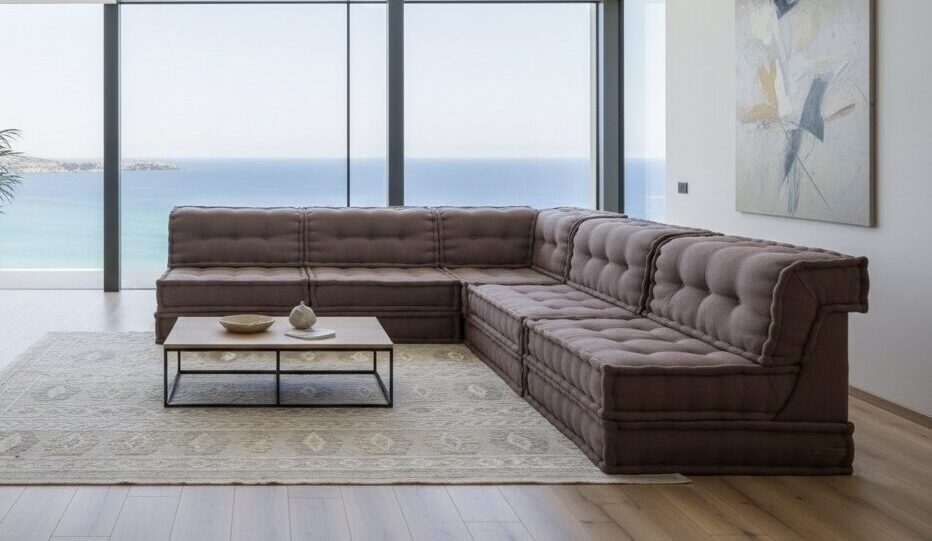
Low seating can make a living room feel calmer, softer, and more grounded, but it can also go wrong fast. If everything sits close to the floor without enough visual balance around it, the room can look unfinished instead of intentional.
The key is not simply adding more furniture. It is creating enough structure, layering, and contrast so the room feels complete at eye level as well as near the floor. That means thinking about proportions, layout, texture, and how the room is actually used day to day.
Here is how to make low seating feel warm, designed, and comfortably lived-in rather than bare.
Start by defining the visual center of the room
Rooms with low seating often feel empty for one main reason: the eye does not know where to land. Traditional living rooms usually solve this with taller furniture pieces, heavier silhouettes, or a strong focal point. With lower profiles, that structure has to come from layout and styling choices instead.
Before adding accessories, define the center of the room clearly. That could be:
- a low seating arrangement around a rug
- a coffee table or central ottoman
- a fireplace wall
- a window area
- a media unit with balanced décor around it
If the seating is spread too loosely around the room, the space can feel disconnected. Pulling pieces into a more deliberate zone creates a sense of purpose. In many cases, the rug should do a lot of this work. A rug that is too small makes low furniture look like it is floating. A larger rug helps anchor the arrangement and visually gathers the room.
This is especially important in open-plan homes, where low seating can otherwise disappear into the larger volume of the space. In that setting, the living zone should feel framed, not scattered.
If the room is built around a casual lounge setup, a grounded arrangement inspired by a floor sofa collection can work beautifully, but only if the boundaries of the seating area are visually clear.

Use layers to build fullness instead of height
A common mistake is trying to “fix” low seating by immediately adding tall pieces everywhere. That can make the room feel top-heavy, especially if the main furniture is intentionally relaxed and close to the floor.
A better approach is to build fullness through layers.
Think in terms of horizontal richness:
- layered textiles
- overlapping shapes
- varied materials
- soft transitions between elements
This is where cushions, throws, and secondary seating make a real difference. Not because they fill space for the sake of it, but because they create depth. A low room with one flat sofa and nothing else can feel stark. The same room with textured cushions, a substantial rug, a low table, and a soft side element feels complete.
Texture matters even more when furniture sits low. Because the profile is simpler, the eye notices surface detail more readily. Linen, bouclé, cotton, woven fabrics, wood grain, and natural fiber rugs all help keep the space from feeling visually thin.
Think in “bands” rather than isolated items
One useful way to style low seating is to imagine the room in visual bands:
- Floor layer: rug, floor cushions, low table, poufs
- Seating layer: sofa, back cushions, arm support, throws
- Mid-height layer: side tables, plants, lamps, shelving, art alignment
This approach helps you avoid a room that feels empty in the middle. Even if the furniture is low, the composition should still feel continuous from the floor upward.
For example, a few well-chosen seat cushion category additions can soften the transition between the rug and the main seating, especially in family spaces, reading corners, or lounge-style rooms where flexibility matters.
Get the proportions right between seating, rug, and surrounding space
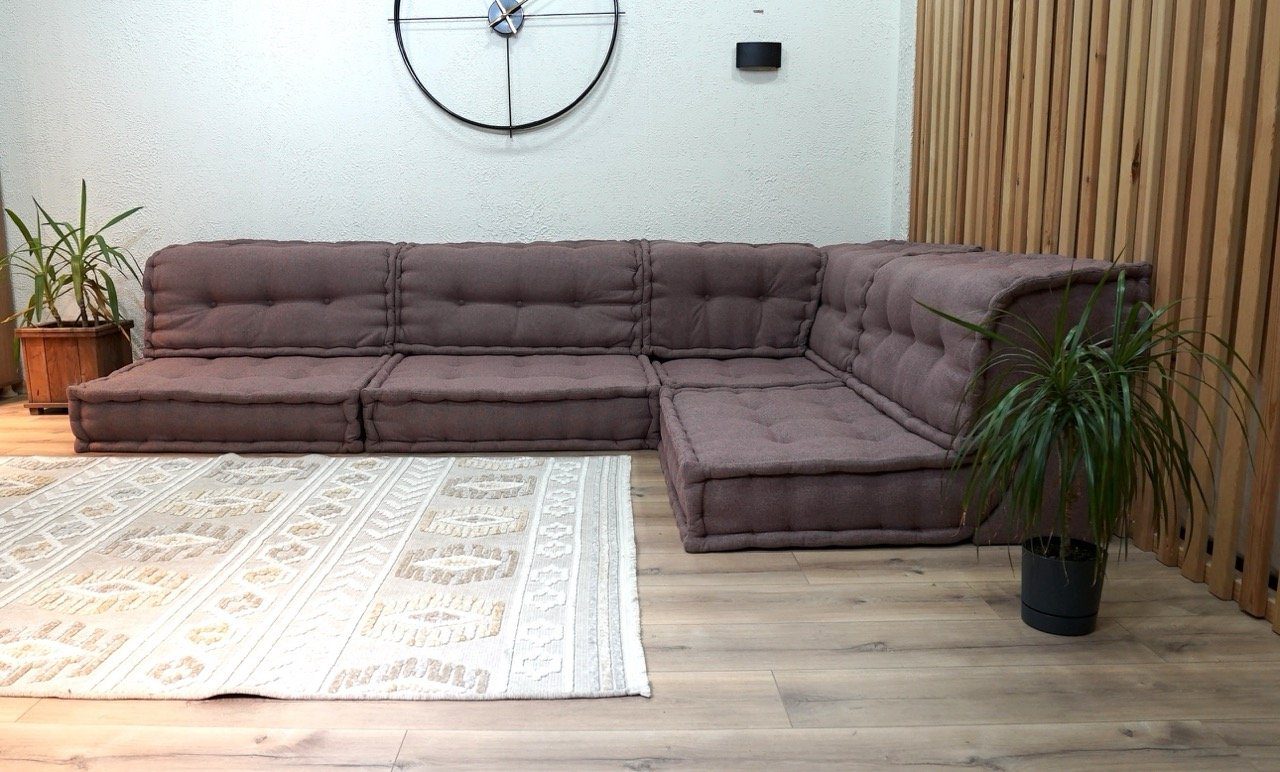
Low seating tends to need slightly different proportion rules than standard sofa layouts. If the furniture is compact and the open space around it is too generous, the room may feel underfurnished even when it technically has enough pieces.
The issue is often not the furniture itself. It is the ratio between the occupied zone and the empty zone.
Here is what usually works better:
- Choose a rug large enough to extend beyond the seating footprint
- Keep the distance between seating pieces close enough for conversation
- Use a coffee table or central piece that has enough visual weight
- Avoid pushing all furniture against the walls unless the room is very small
- Balance negative space rather than eliminating it
Negative space is useful. It gives low interiors their calm, breathable look. But too much of it around short, simple forms makes the room feel unfinished. The goal is balanced openness, not emptiness.
Small rooms vs. large rooms
In a small living room, low seating can actually make the room feel bigger because it preserves sightlines. The risk here is going too minimal. A tiny room still needs softness and structure, so a rug, wall art, and one or two layered accents are often essential.
In a larger living room, low seating can look elegant and expansive, but only if the layout is scaled properly. A single compact arrangement in the middle of a big room often looks lost. Larger rooms usually need one of the following:
- a broader seating grouping
- multiple connected low pieces
- secondary accents like poufs or side seating
- stronger visual framing through lighting, art, or shelving
This is where people often underestimate scale. They choose low seating for the look, but they size it as if the room were much smaller.
Bring the eye upward in subtle, intentional ways
A living room with low seating should not feel flat. It needs some vertical movement, but not necessarily tall furniture everywhere. What matters is giving the eye a reason to travel upward naturally.
The most effective ways to do that are usually:
- artwork or a wall composition above the seating area
- a floor lamp with a light visual profile
- curtains hung higher than the window frame
- plants with soft height
- open shelving or a simple console behind or beside the seating zone
The trick is restraint. If everything vertical is bold, the room can lose the relaxed character that makes low seating appealing in the first place. You want contrast, not competition.
Curtains are especially powerful here. In a room with low furniture, well-placed curtains can make the whole space feel taller and more finished. They also add softness, which helps counterbalance the strong horizontal emphasis of low seating.
Art placement matters too. If artwork is hung too high, it disconnects from the furniture below it. If it is too small, it can look insignificant against an intentionally low arrangement. The scale should feel related to the width of the seating area, not chosen in isolation.
Mix comfort with structure so the room feels inviting, not shapeless
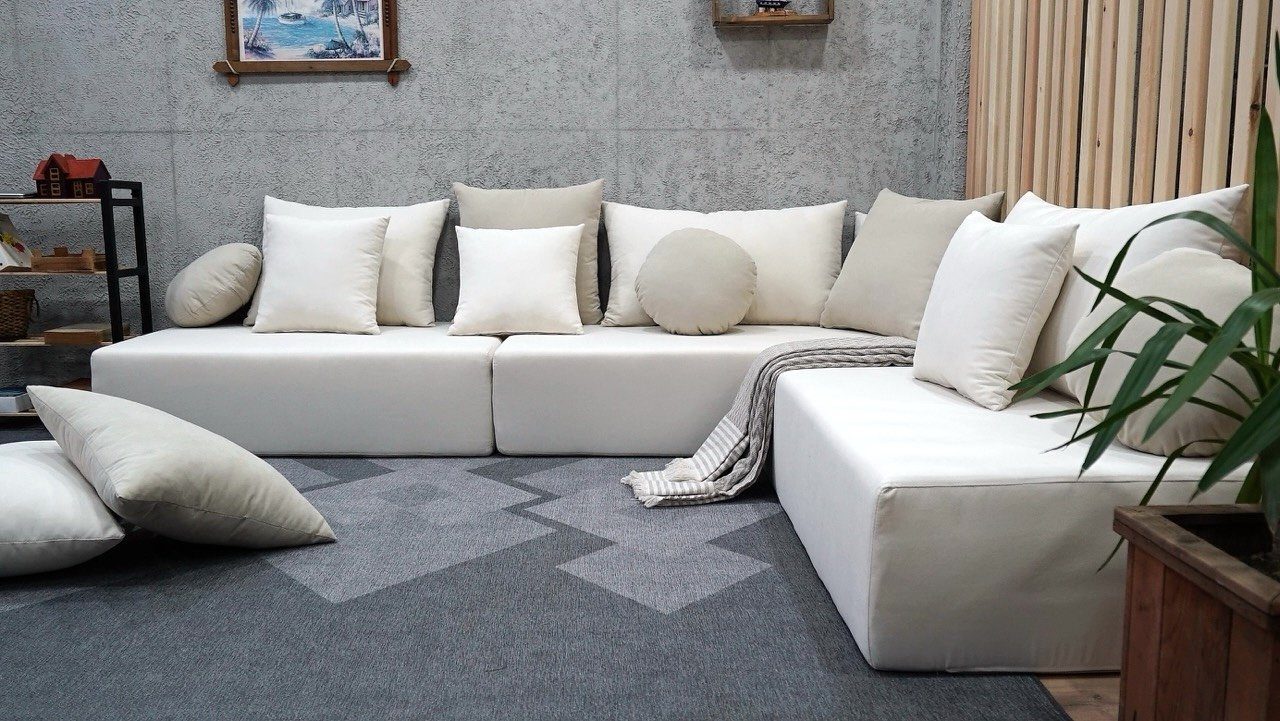
Low seating works best when it looks relaxed but still holds its shape visually. If every element is overly soft, slouchy, or unstructured, the room can start to feel messy rather than cozy.
This balance depends on the look you want.
For a softer, more casual room
A softer room benefits from:
- layered cushions in varied sizes
- tactile fabrics
- rounded forms
- low, broad tables
- warm, muted tones
This works well in reading corners, family lounges, and spaces meant for long, informal sitting. It also suits homes where the living room doubles as a flexible space for gathering, stretching out, or casual entertaining.
For a more defined, polished room
A more structured room usually needs:
- cleaner lines
- fewer but more substantial accessories
- materials with visual clarity, such as wood, leather accents, or crisp woven fabric
- stronger shape contrast between seating and tables
- more deliberate symmetry or alignment
This kind of styling often suits modern interiors, transitional homes, or rooms where low seating is meant to look refined rather than bohemian.
In both cases, support matters. People do not only judge a room by how it looks; they judge it by how usable it feels. If low seating appears beautiful but uncomfortable, the room can feel decorative rather than livable. Back support, seat depth, and the firmness of surrounding elements all affect whether a low layout feels welcoming for everyday use.
That is one reason poufs, side cushions, and supportive layered elements can work so well. They help low seating feel adaptable instead of rigid.
Choose materials and colors that add depth, not flatness
Because low seating keeps the room visually open, materials do more of the work. Flat finishes in similar tones can make the space feel washed out. Too many competing textures, on the other hand, can make it feel busy without adding real warmth.
A better strategy is to combine a few materials that each contribute something different.
For example:
- a woven or natural fiber rug for grounding
- upholstery with visible texture
- wood for warmth and structure
- soft matte finishes rather than too many glossy ones
- a few tactile accents such as knit, linen, or brushed cotton
Color should also support the mood of fullness. Very pale, low-contrast rooms can look airy, but they can also look sparse if the shapes are all low and simple. That does not mean the palette needs to be dark. It means it should have enough contrast to show depth.
This can come from:
- tonal layering within one color family
- a deeper rug under lighter seating
- darker wood or accent pieces
- patterned cushions used sparingly
- earthy or warm neutrals that keep the room from feeling cold
For homes with traditional or majlis-inspired influences, richer textures and more layered fabrics often help low seating feel especially complete. In more modern rooms, the same sense of completeness can come from cleaner contrasts and more disciplined repetition.
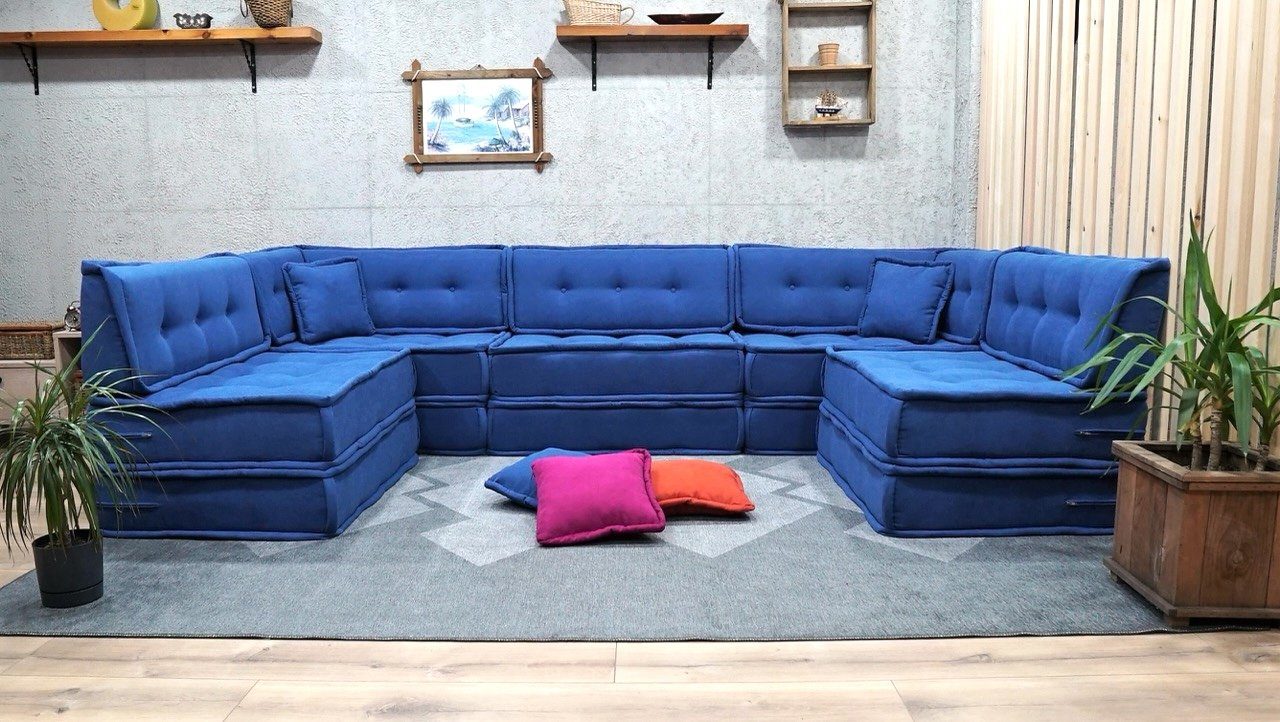
Avoid the styling mistakes that make low seating look unfinished
Some low-seating rooms feel empty because of one major issue. Most feel empty because of several small ones happening together.
Here are the most common problems:
- The rug is too small. This is one of the fastest ways to make the furniture look disconnected.
- There is no central anchor. Without a coffee table, ottoman, or strong focal point, the layout can drift.
- Everything is the same height. A little variation is necessary for balance.
- There is not enough texture. Low-profile rooms need surface richness to avoid looking flat.
- The walls are ignored. If the lower half of the room is active and the upper half is blank, the room often feels incomplete.
- The furniture is undersized for the room. Low pieces should still feel substantial enough for the space they occupy.
- Comfort was treated as an afterthought. If the arrangement looks neat but does not invite people to stay, it rarely feels finished.
A final mistake is copying a photo without considering real use. A low seating arrangement in a formal sitting room can be styled more minimally than one in a home where people watch films, read, host friends, or spend long evenings together. The more everyday use the room gets, the more support, flexibility, and durability matter.
That applies to maintenance too. In busy homes, easy-care fabrics, movable pieces, and adaptable layouts tend to age better than precious styling choices that only work in untouched rooms.
Style for the way the room will actually be used
The best low-seating rooms do not just look good in pictures. They suit the rhythm of the household.
In a family home, low seating often needs:
- washable or forgiving materials
- enough support for longer sitting
- flexible pieces that can be moved easily
- space for circulation and daily activity
In a guest room or occasional lounge, appearance may matter slightly more than all-day support, so the layout can be more decorative and pared back.
In a reading corner or quiet retreat, softness, layered light, and tactile comfort usually matter more than formal symmetry.
In a multifunctional room, flexibility becomes essential. That is where modular low seating, movable poufs, and stackable or adaptable cushions can be especially useful without making the room feel crowded.
This is also where style decisions become more personal. A household that prefers a calm, minimal interior may want fewer pieces with stronger texture. A household that loves warmth and gathering may prefer more layers, denser seating, and a slightly more enveloping arrangement.
Either approach can work. What makes the room feel full is not simply the amount of furniture. It is the sense that every piece belongs to a complete, usable whole.
Low seating is most successful when it feels intentional from every angle: grounded in layout, rich enough in texture, balanced in scale, and comfortable enough that people naturally want to settle into it.
You can view our oriental floor seating options at this link: https://sofasia.com/oriental-sofas/