Blog
Indoor vs Outdoor Seat Cushions: What Actually Matters in Daily Use?

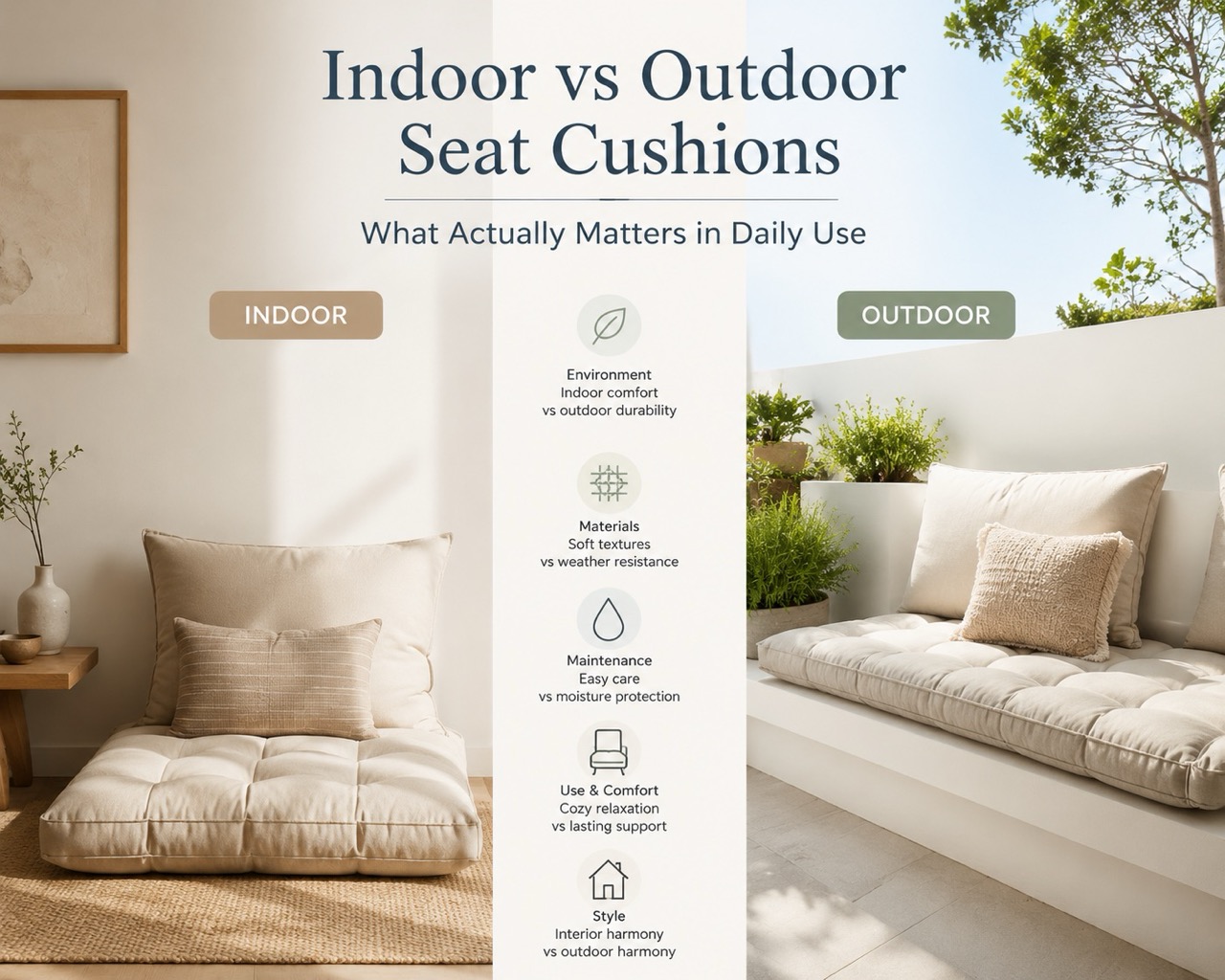
A seat cushion may look like a simple comfort accessory, but the right choice depends on where it will be used, how often it will be handled, and what kind of experience you expect from the space. A cushion placed in a living room reading corner has very different requirements from one used on a balcony, terrace, or garden seating area.
The biggest differences between indoor and outdoor cushions are not only about appearance. Material structure, moisture resistance, fabric durability, cleaning requirements, firmness, and long-term comfort all affect how well a cushion performs over time.
Understanding these differences helps you choose a seating solution that matches your lifestyle instead of focusing only on color or visual appeal.
The Main Difference: Environment Determines the Right Cushion
The first question to ask is simple: where will the cushion spend most of its time?
Indoor cushions are designed for controlled environments. They focus more on softness, texture, body support, and creating a comfortable atmosphere inside the home. They are commonly used in living rooms, lounge areas, reading spaces, guest rooms, or relaxed seating arrangements.
Outdoor cushions need to handle changing conditions. Sunlight, humidity, temperature changes, dust, and occasional moisture create different challenges. Their materials are generally selected to resist environmental stress rather than maximize softness alone.
This does not mean outdoor cushions are uncomfortable or indoor cushions are fragile. The difference lies in what each design prioritizes.
A useful way to think about it:
- Indoor cushions prioritize comfort, texture, and visual harmony.
- Outdoor cushions prioritize resistance, easy maintenance, and durability.
Choosing based on location first prevents many common mistakes.
Comfort and Support: Softness Is Not the Only Factor
Many people assume that the softest cushion will always be the most comfortable. In daily use, comfort is more complex.
An indoor cushion often benefits from softer filling materials because it is usually used for longer periods. Sitting during a movie night, reading a book, or relaxing with guests requires a balance between softness and support.
A cushion that is too soft may feel comfortable initially but lose its shape quickly. A cushion that is too firm may not provide the relaxed feeling many people expect from casual seating areas.
For floor-based seating arrangements, comfort depends heavily on:
- cushion thickness
- filling density
- how weight is distributed
- whether the cushion supports the hips and lower back
- how frequently it will be used
For example, a decorative cushion placed occasionally in a guest room does not need the same structure as a cushion used every evening by a family.
Click for our bench cushions: sofasia.com/seat-cushions
Outdoor cushions often use firmer fillings because they need to maintain shape despite temperature changes and repeated exposure. The goal is usually consistent support rather than a deep, soft feeling.
Fabric Choice: Appearance vs Performance
Fabric is one of the most important differences between indoor and outdoor cushions.
Indoor fabrics are usually chosen for:
- softness against the skin
- rich textures
- visual warmth
- compatibility with interior design styles
Materials with woven textures, natural-looking finishes, or decorative patterns are often preferred because they contribute to the overall character of a room.
Outdoor fabrics need additional qualities:
- resistance to fading from sunlight
- easier cleaning
- quicker drying
- stronger surface durability
A fabric that looks beautiful inside a home may not perform well outdoors. Direct sunlight can gradually weaken colors, while moisture can create problems if the material is not designed for those conditions.
This is why using an indoor cushion on a balcony or uncovered terrace often leads to disappointment. The issue is not the quality of the cushion itself; it is a mismatch between the material and the environment.
Moisture Resistance and Maintenance Requirements
Daily practicality is often where the biggest difference appears.
Indoor cushions usually have fewer maintenance concerns because they are protected from rain, outdoor dust, and temperature changes. Regular vacuuming, occasional fabric cleaning, and proper storage are generally enough.
Outdoor cushions require more attention because they face:
- rainwater
- humidity
- pollen
- dust
- bird residue
- strong sunlight
A good outdoor cushion should dry relatively quickly and should not easily trap moisture inside its filling.
However, even outdoor-resistant materials are not completely maintenance-free. Leaving cushions exposed throughout every season can shorten their lifespan. Using covers, storing them during harsh weather, and allowing proper ventilation can significantly improve durability.
For indoor seating, maintenance decisions are often about preserving appearance. For outdoor seating, they are also about protecting the material structure.
Room Style and Design Considerations
Comfort is important, but cushions also influence how a space feels visually.
Indoor cushions allow more freedom in design because they can become part of the room’s identity. They can introduce:
- warmer textures
- traditional patterns
- layered seating arrangements
- relaxed lounge aesthetics
- minimalist softness
For homes inspired by cozy, low seating arrangements, floor-based seating can create a more informal and welcoming atmosphere.
Click for floor sofas: sofasia.com/floor-sofas
Spaces influenced by oriental or majlis-inspired interiors often use cushions not only as comfort elements but also as part of the room’s overall character. Layering different textures and heights can make a seating area feel more inviting without overcrowding it.
Click for our oriantal majlis sofas: sofasia.com/oriental-sofas
Outdoor spaces usually benefit from a different approach. The design needs to work with the surrounding environment. Colors, materials, and patterns should remain practical while still complementing the outdoor setting.
Common Mistakes When Choosing Seat Cushions
Many cushion choices fail because people focus only on appearance. A few common mistakes can reduce comfort and durability.
Choosing Based Only on Color
A cushion may match your room perfectly but still feel uncomfortable after long periods of sitting. Material quality and support should come before visual details.
Using Indoor Cushions Outdoors
This is one of the most common mistakes. Indoor fabrics and fillings may absorb moisture, fade faster, or become difficult to clean when exposed to outdoor conditions.
Ignoring Size and Proportion
A cushion that is too small may look disconnected from the seating area. One that is too large can make movement difficult.
Before choosing, consider:
- available seating width
- cushion thickness
- surrounding furniture size
- how many people will use the area
A balanced proportion makes both indoor and outdoor spaces feel more organized.
Prioritizing Softness Over Long-Term Use
A very soft cushion may feel luxurious at first but may not provide enough support for daily sitting. The right choice depends on usage frequency.
Which Option Works Better for Different Living Situations?
There is no single winner between indoor and outdoor cushions. The right choice depends on your environment and habits.
For Living Rooms and Relaxed Indoor Areas
Indoor cushions are generally more suitable because they provide greater flexibility in texture, softness, and design.
They work well for:
- reading corners
- family relaxation areas
- floor seating arrangements
- guest spaces
- lounge-style interiors
For Balconies, Terraces, and Gardens
Outdoor cushions are better suited because they are designed to handle environmental changes.
They are practical for:
- covered balconies
- patio seating
- garden furniture
- outdoor relaxation spaces
For Multipurpose Spaces
Some homes use the same area for different purposes, such as enclosed balconies or adaptable rooms.
In these cases, consider:
- how much sunlight the area receives
- whether moisture is possible
- how often cushions will be moved
- whether easy cleaning is a priority
A partially outdoor space may require more durable materials even if it feels like an indoor room.
How to Make a Better Choice Before Buying
Before choosing a cushion, evaluate the space rather than starting with the product itself.
Ask yourself:
- Where will the cushion be used most often?
- Will it experience sunlight or moisture?
- Will people sit on it for hours or only occasionally?
- Is appearance or easy maintenance the bigger priority?
- Will it need to match existing furniture?
Thinking through these questions helps avoid replacing cushions later because they do not fit your daily routine.
A comfortable home is usually created through small details that work together. The right cushion should support the way you actually live, not just the way the room looks.